Leadership in 21st-Century Turbulence

Behavioural and Cultural Determinants of Power:            Hubris and Narcissism in Decision-Making Systems


Research Perspective

My research leverages real-world leadership experience to explore how decision-making evolves under uncertainty, pressure, and asymmetric power dynamics. Situated at the crossroads of leadership studies, organisational psychology, behavioural decision theory, and sociology, it conceptualises leadership as a dynamic behavioural system shaped by cognition, emotion, institutional structures, and the wider social environment.
 
This research investigates how perceptions of authority, influence, hierarchy, and social context shape leadership behaviour, organisational culture, interpersonal trust, and strategic decision-making. It further seeks to understand how decision distortion arises within organisations, how it becomes normalised, and the conditions under which it can be identified and remedied.
 

The aim is not only to analyse leadership behaviour, but also to understand the conditions under which decision distortion emerges, stabilises, or can be corrected within organisational life.

Understanding behavioural & cultural determinants

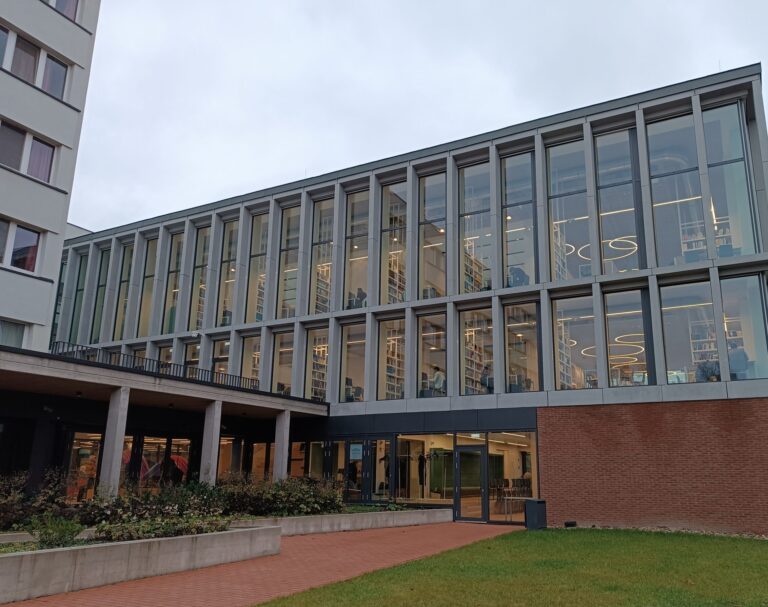
At the Budapest University of Economics and Business (BUEB), my research explores leadership behaviour in international organisational contexts, with academic and professional collaborations in London and Liverpool. The focus of my work is Hubris Syndrome, examining how overconfidence influences decision-making and organisational performance.

Drawing on economic psychology, my research investigates how cognitive biases, emotional regulation, and perceived authenticity shape leaders’ understanding and exercise of power. The aim is to better understand the psychological and behavioural mechanisms that drive leadership decisions in complex organisational environments.

The research is supervised by Professor Gyula Bakacsi, whose guidance has been instrumental in shaping both the theoretical and methodological direction of the project. It is also embedded in an international academic network spanning the United Kingdom and the United States, enabling a comparative and cross-cultural perspective.

Methodological Approach & Research Positioning

The study employs an interdisciplinary approach, combining behavioural economics, organisational sociology, and cognitive psychology. Through qualitative methods and conceptual modelling, I examine how leadership cognition translates into organisational outcomes amid volatility and complexity. This work is situated within contemporary leadership studies, with particular attention to behavioural distortion mechanisms in high-power environments.

International Collaboration & Academic Context

The research is embedded in an international academic network spanning Central Europe, the United Kingdom, and the United States. This comparative perspective enables the analysis of leadership behaviour across different cultural and institutional settings, strengthening the external validity of the Responsive Leadership System (RLS) framework.

Research Logic and Corrective Leadership Perspective

The research examines a behavioural progression in which power perception, excessive confidence, and distorted self-attribution may contribute to hubristic leadership patterns and impaired decision-making processes:

Power → Overconfidence → Hubris → Decision Distortion → Organisational Damage → Corrective Leadership Mechanisms
 

While the study investigates the emergence and organisational impact of hubris-related behavioural distortions, it also explores the conditions under which such patterns can be recognised, challenged, and corrected. Particular attention is given to feedback systems, leadership humility, psychological safety, and organisational cultures that enable self-correction within high-power environments.

Applied leadership perspectives, including recognition-based and inclusive leadership approaches, provide practical insight into how organisations may develop behavioural safeguards against excessive concentration of authority and reduced openness to corrective information.




Core Research Areas

Applied Dimensions

Integration

Andreas Z. Magony
Andreas Z. Magony

Decision Behaviour in Complex Systems

Behavioural and cognitive dynamics

Organisations struggle not because of change itself, but because of how decision-making and behavioural patterns respond to uncertainty.

Research and behavioural insight

RLS integrates behavioural science, neuroleadership, and organisational research to identify distortions in leadership perception, decision-making, and execution.

From insight to action

The framework translates behavioural and cognitive insights into structured systems that support adaptive leadership and more effective organisational responses.

Expected Contribution

The project aims to enhance both academic discourse and leadership practice by providing a structured behavioural model that helps understand perceptions of power, minimises decision bias, and improves organisational adaptability in turbulent environments.

Academic Contribution

  • Offering a structured behavioural model for understanding power perception.
  • Advancing research on hubris and narcissistic leadership behaviour.
  • Integrating behavioural economics with organisational leadership studies.

Applied Leadership Contribution

  • Reducing decision bias in leadership systems.
  • Improving organisational adaptability in turbulent environments.
  • Supporting behavioural feedback mechanisms in executive decision-making.

Practical Impact

  • Enhanced leadership diagnostics.
  • Better understanding of cognitive distortion in high-power contexts.
  • Improved decision-making quality in complex organisations.

Leadership,
Culture, and
Artistic Thinking
in Organisations

Art is Business, Business is Art

In recent years, in collaboration with Professor Gyula Bakacsi, we have explored the organisational conditions that enable sustainable, future-oriented operations. Our joint work combines research, interdisciplinary dialogue, and professional workshops focused on organisational adaptability, resilience, and long-term societal impact.
 
A central dimension of this collaboration is the role of the arts in organisational thinking and transformation. We investigate how artistic perspectives and creative methodologies can contribute to more human-centred, reflective, and adaptive organisational cultures.
 
In 2022, we developed a new social and mental framework to address emerging organisational and societal challenges by integrating management research, creativity, and cultural insight.


Academic Teaching

At Budapest Business University (BUEB), my teaching emphasises leadership behaviour, organisational decision systems, and applied behavioural economics.
 
I also lead workshops on personal branding, arts-based leadership development, and assertive communication. These workshops complement my research by bridging behavioural theory with experiential learning and real-world leadership dynamics.
 
 
2265 by 1790 pixels

Boosting productivity, initiating creativity, inspiring leadership